
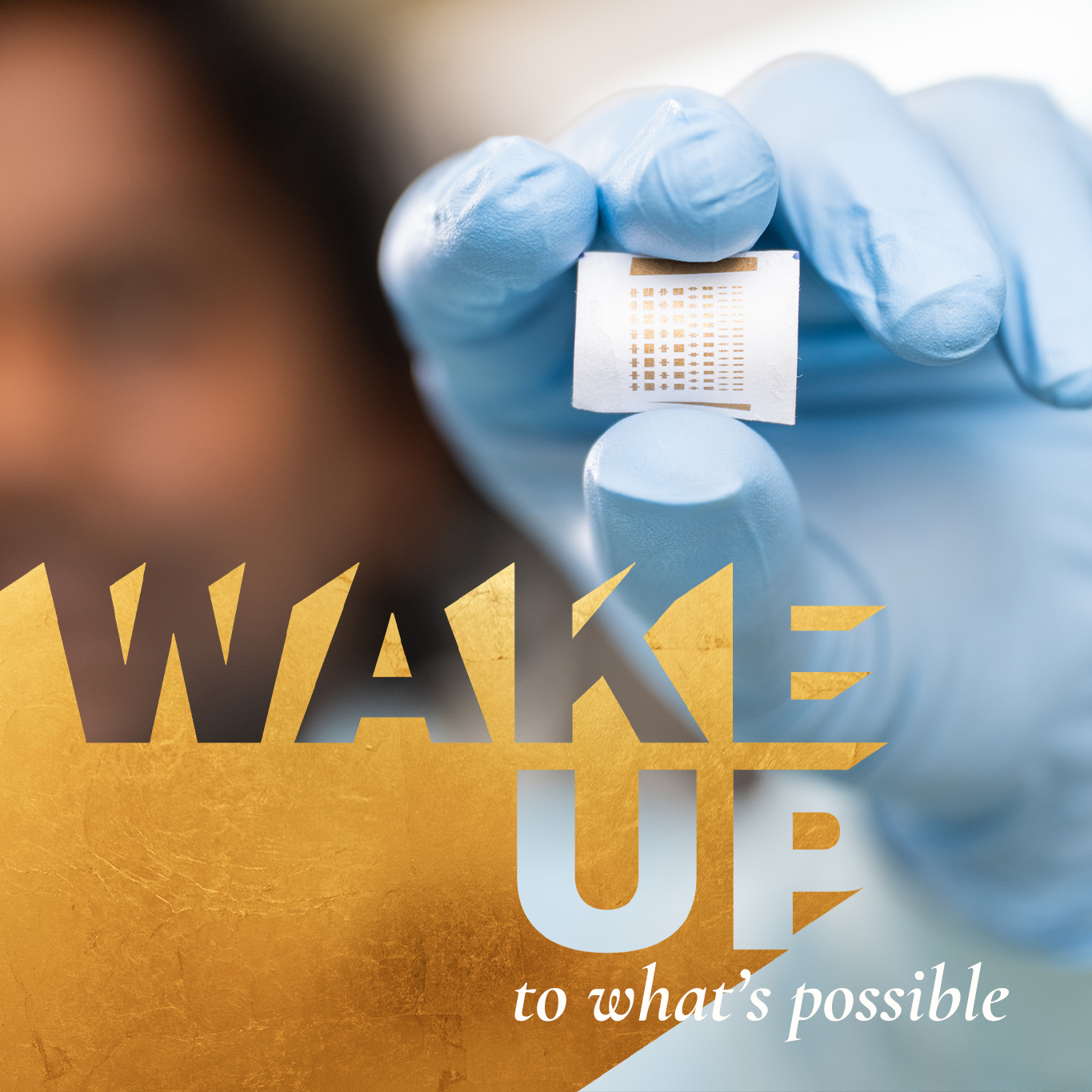
Designed to support tech innovations, NanoteQ offers ultra-clean room for creating computer microchips and expanded, advanced microscopy and spectroscopy lab
Emerging & Future Technologies
Emerging & Future Technologies
The pace of technological advancement is rapidly reshaping every aspect of human life and society’s foundations — education, work, justice, environment, and human connection. Artificial intelligence rivals the internet in societal impact, while fields like regenerative medicine, materials science, and quantum computing hold vast promise — and profound risk.
Guided by our Pro Humanitate ethos, Wake Forest’s Emerging and Future Technologies (E‑FT) Initiative advances inquiry and education that integrate discovery and technical excellence with ethics and policy to promote human flourishing.
As scientific discovery accelerates and technological systems become more deeply embedded in daily life, Wake Forest is embracing an approach that joins engineering and computation with ethical reflection, creativity, and social responsibility. Innovation, in this view, is never separate from the people and communities it affects.
We envision a future in which breakthrough technologies are designed with care for both people and the planet; discovery is approached with integrity; and progress expands opportunity rather than widens divides.
This vision means:
- Transforming fundamental science into materials, devices, and systems that improve health outcomes, reduce environmental impact, and strengthen resilient communities.
- Uniting disciplines: engineering, computer science, physics, chemistry, medicine, law, business, divinity, and the arts to shape technologies that advance justice, sustainability, and human dignity.
- Approaching artificial intelligence as a space for understanding human agency, character, and judgment, a catalyst for transformative learning and student growth as well as a means to develop new tools for efficiency and/or automation.
- Creating experiential learning environments in which students and faculty design with vision, deliberate with wisdom, and act with courage.
- Developing partnerships and new approaches to communication with communities outside of higher education to foster trustworthiness, equity, and long-term societal wellbeing.

Wake Forest University’s Emerging and Future Technologies initiative unites cutting-edge science and engineering with law, medicine, business, the arts, and the liberal arts — ensuring that the university’s contributions to transformative technologies are matched by equal commitment to their ethical use and societal impact. (Click to learn more.)
At the scientific core, the Center for Functional Materials (CFM) and NanoteQ Center bring together approximately 40 distinguished faculty working across nanomaterials, quantum information systems, and advanced materials, supported by state-of-the-art fabrication and characterization infrastructure. NanoteQ’s Quantum Computing Working Group is developing novel quantum processing technologies that have already attracted substantial commercial investment.
Artificial intelligence represents the initiative’s second major pillar — one Wake Forest is actively and strategically building, with new programs and collaborations launching across every school and campus. AI @ Wake serves as the university-wide hub connecting faculty, staff, and students to resources and guidance, while the Center for Artificial Intelligence Research (CAIR) at the School of Medicine is establishing leadership in AI-driven healthcare spanning diagnostics, health equity, and cancer care. The Wake Forest Institute for Regenerative Medicine (WFIRM) — recognized internationally as a leader in translating scientific discovery into clinical therapies, and the first in the world to engineer laboratory-grown organs successfully implanted in humans — is now deploying AI, 3D bioprinting, and body-on-a-chip technologies across its work on more than 40 replacement tissues and organs. The Center for Remote Health Monitoring develops user-centered digital health technologies that provide an unprecedented picture of a person’s health in everyday life using wearable sensors, AI, and machine learning to monitor conditions ranging from cardiac arrhythmia and sleep disorders to mental health and mobility. The Center for Bioethics, Health, and Society ensures that across all of these frontiers — from AI-driven diagnostics to engineered organs — ethical oversight and humanistic inquiry remain integral to discovery rather than afterthoughts.
The Departments of Computer Science, Engineering, Physics, and Chemistry provide the core technical foundation for AI and data science research, while the AI in Intelligent Remote Sensing in Conservation and Discovery (IRSC) Lab is pioneering the use of AI and geospatial technologies in biodiversity science — in partnership with the Sabin Center for Environment and Sustainability and CINCIA. The Business School’s Center for Analytics Impact links AI and data science to industry partnerships and experiential learning, and the new Master of AI Strategy and Innovation in the School of Professional Studies is preparing the next generation of leaders to navigate AI-driven transformation. Finally, the Intellectual Property Clinic at the Law School is building expertise in the legal frameworks governing emerging technologies, and the AI Institute Summer Program is already building a pipeline of students fluent in both the science and ethics of AI.What makes Wake Forest’s Emerging and Future Technologies initiative truly distinctive is the depth of its human-centered framing. The Humanities Institute, the Center for Literacy Education, and the Center for the Advancement of Teaching (CAT) lead critical inquiry into how AI and emerging technologies reshape communication, creativity, writing, and pedagogy — while the Program for Leadership and Character brings nationally recognized, research-grounded scholarship on ethics and moral formation directly into engineering and technology education. This breadth reflects Wake Forest’s teacher–scholar model and its Pro Humanitate mission at their most distinctive: the conviction that building technological capacity and cultivating ethical wisdom are not separate tasks but one unified endeavor.
Explore the Forest
More than 20 programs and centers are advancing this work.
Stories
Showing up & taking action
-
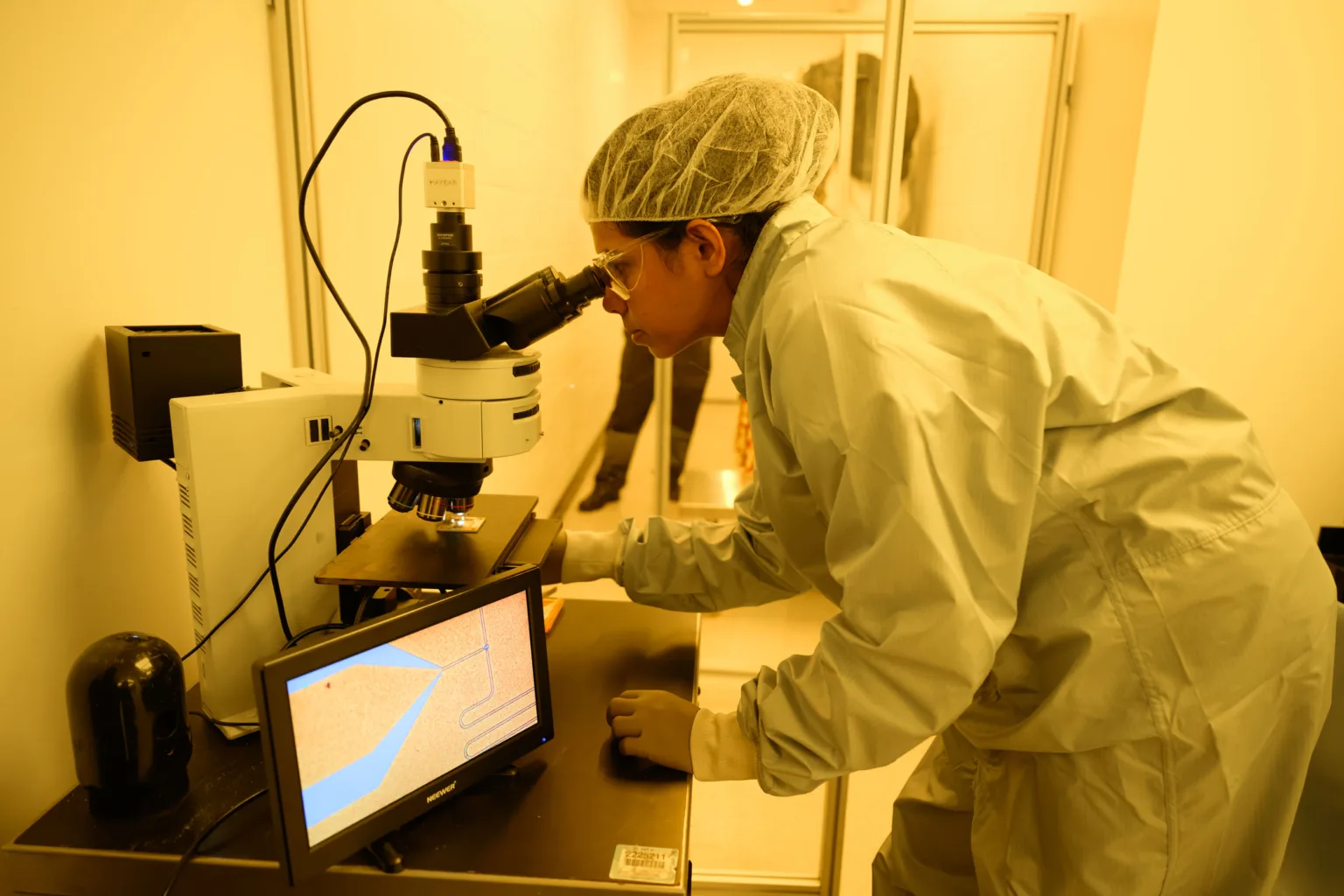
New Wake Forest quantum lab takes research to the next level
-

Developers beware: When apps add AI, it risks hacking
In the race to add AI capabilities to their mobile apps, developers have opened up a new security weakness that puts their own wallets at risk.
A new study led by Wake Forest undergraduate student Eric Gao analyzed 444 iOS applications. It found that 282 exposed credentials needed to access the developers’ large language model (LLM) accounts.
-

AI agents are all the rage—but research shows they leak private data
Wake Forest professor uncovers significant security issues with large language models.
Before you prompt AI to answer another question or perform another task, a Wake Forest computer scientist wants you to know it could expose your sensitive data.
-

Can we build software secure enough to thwart AI attacks?
The OpenAI breach of Hugging Face’s digital library amplifies a growing concern among cybersecurity researchers: The fast-moving software development process isn’t thinking about security early—or broadly—enough.
-

Multi-agent AI could change everything – if researchers can figure out the risks
You might have seen headlines sounding the alarm about the safety of an emerging technology called agentic AI. That’s where Sarra Alqahtani comes in. An associate professor of computer science at Wake Forest University, she studies the safety of AI agents through the new field of multi-agent reinforcement learning (MARL).
-
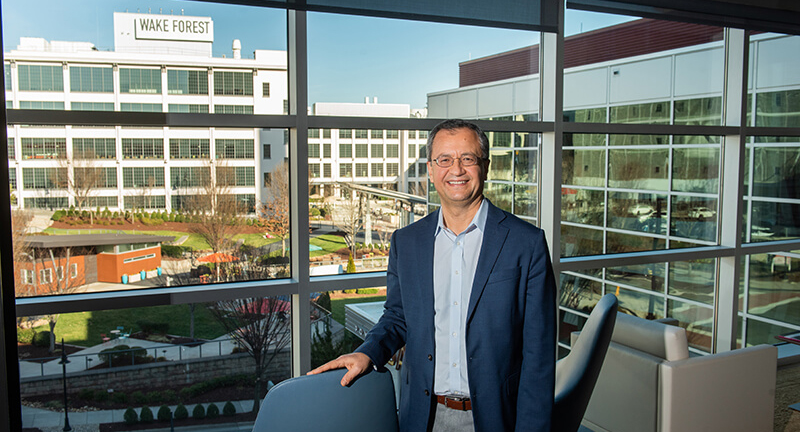
AI: The Future of Health Care
Metin Nafi Gurcan, PhD, leads Wake Forest’s Center for Artificial Intelligence Research, using AI to improve health equity, predict maternal mortality risk, and accelerate cancer care diagnostics.
-
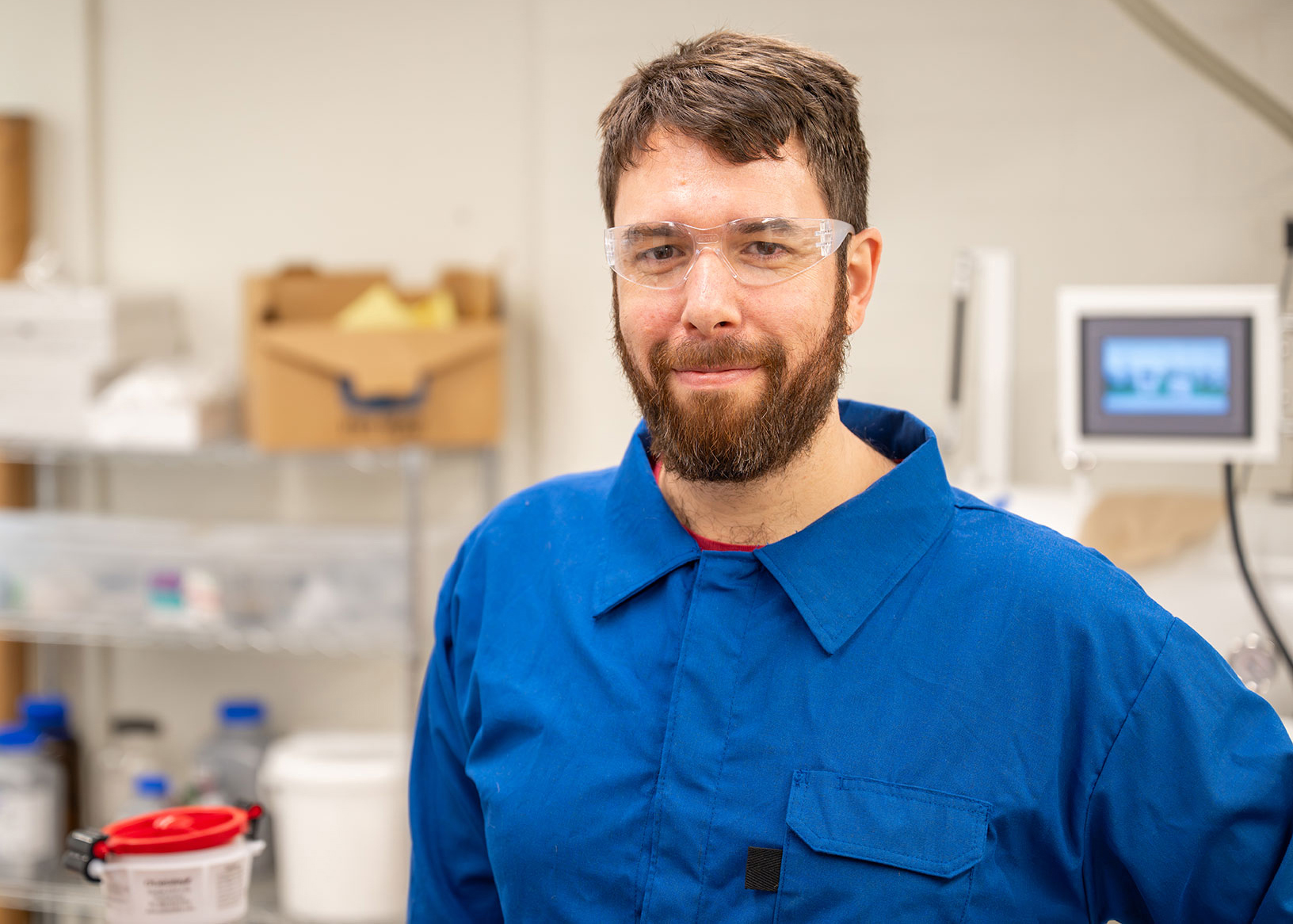
Professor wins award to study color-changing plastic and shape-shifting springs
Imagine putting a bandage on a wound. As your wound heals, the bandage is white, but if it becomes infected, the bandage alerts you by turning deep blue. Infrared light then heats the wound, killing off bacteria and turning the bandage white again once the infection is gone.
-

Beyond the screen: Digital literacy and brain health
Watching his kindergartener play on a school playground, Alan Brown, director of the Wake Forest Center for Literacy Education, found the theme for this year’s Visiting Scholars Speaker Series.
-

New heart valve procedure at Atrium Health Wake Forest Baptist offers hope for patients with limited treatment options
Atrium Health Wake Forest Baptist has completed its first minimally invasive heart procedure to replace the tricuspid valve using new catheter-based technology. This breakthrough, which is a first in the Triad, offers a new option for patients with severe tricuspid regurgitation, a condition that can be difficult to treat and often leaves patients with limited choices. The procedure replaces the tricuspid valve using a catheter guided through a vein rather than requiring openheart surgery.
-

ARPA-H PRINT program supports WFIRM-led award to create on-demand, bioprinted kidneys
With an up to $24.8 million, 5-year award, the Wake Forest Institute for Regenerative Medicine will help address the nation’s growing organ donor shortage by bioprinting on-demand kidney tissues.
The new funding, from the Advanced Research Projects Agency for Health (ARPA-H), will enable WFIRM to produce bioprinted, vascularized kidney tissue that augments renal function in patients suffering from kidney disease. The implantable kidney tissue will be made from a patient’s own cells combined with a bioink that supports the long-term viability of the implanted cells.
-
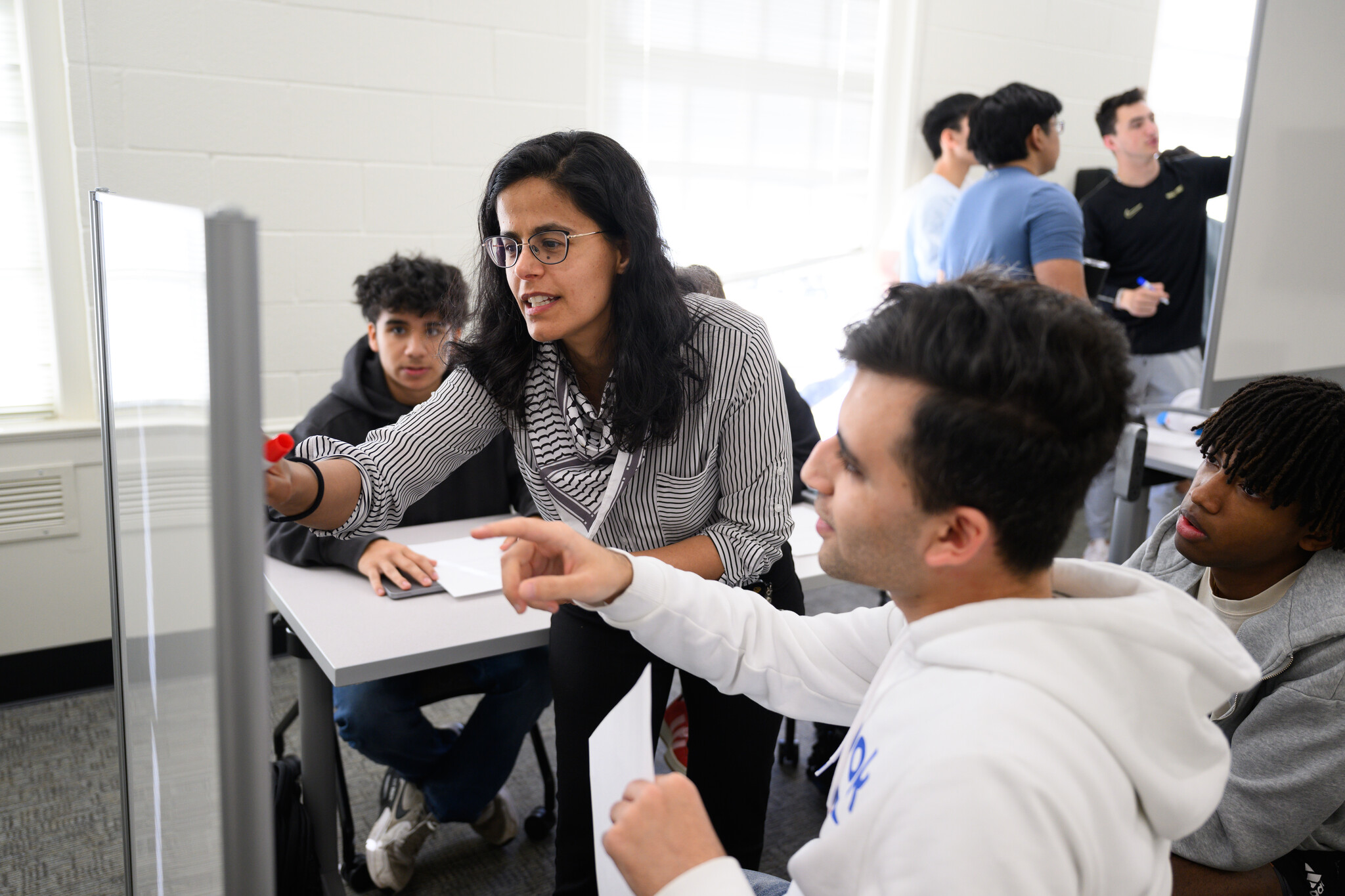
Explainer: The Possibilities of Multi-Agent AI
Exciting news and foreboding warnings abound alongside the accelerated development of Artificial Intelligence these days. Multi-Agent AI (MAAI), which consists of networks of AI agents operating together in a dynamic environment, is no exception. Sabin Center Faculty Affiliate Sarra Alqahtani recently received a National Science Foundation CAREER award to help advance the safety and reliability of MAAI through an approach known as Multi-Agent Reinforcement Learning (MARL).
-
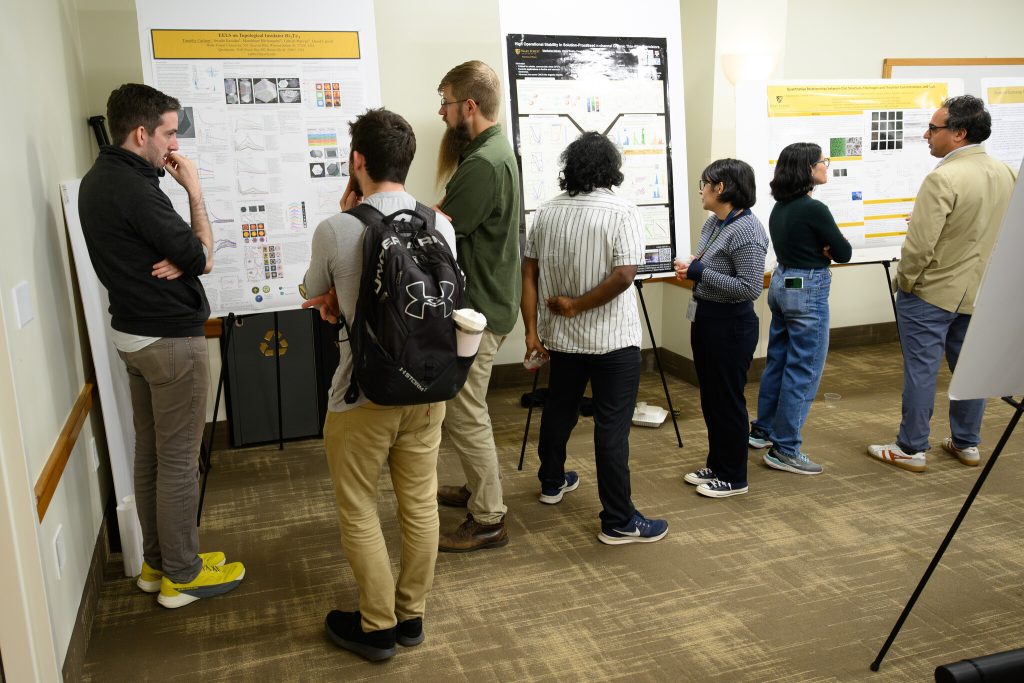
Research Day showcases how functional materials shape a better future
On the surface, the posters lining the walls of Benson 410 at Wake Forest’s third annual Center for Functional Materials (CFM) Research Day looked like the typical trappings of an academic showcase: charts, microscopy images, material diagrams, lines of data. But a closer look revealed something deeper. These projects—ranging from nanomaterials for cancer detection to thin-film technologies for improved solar cells—represent the quiet engines of innovation that shape how we communicate, generate energy, heal, and live.