
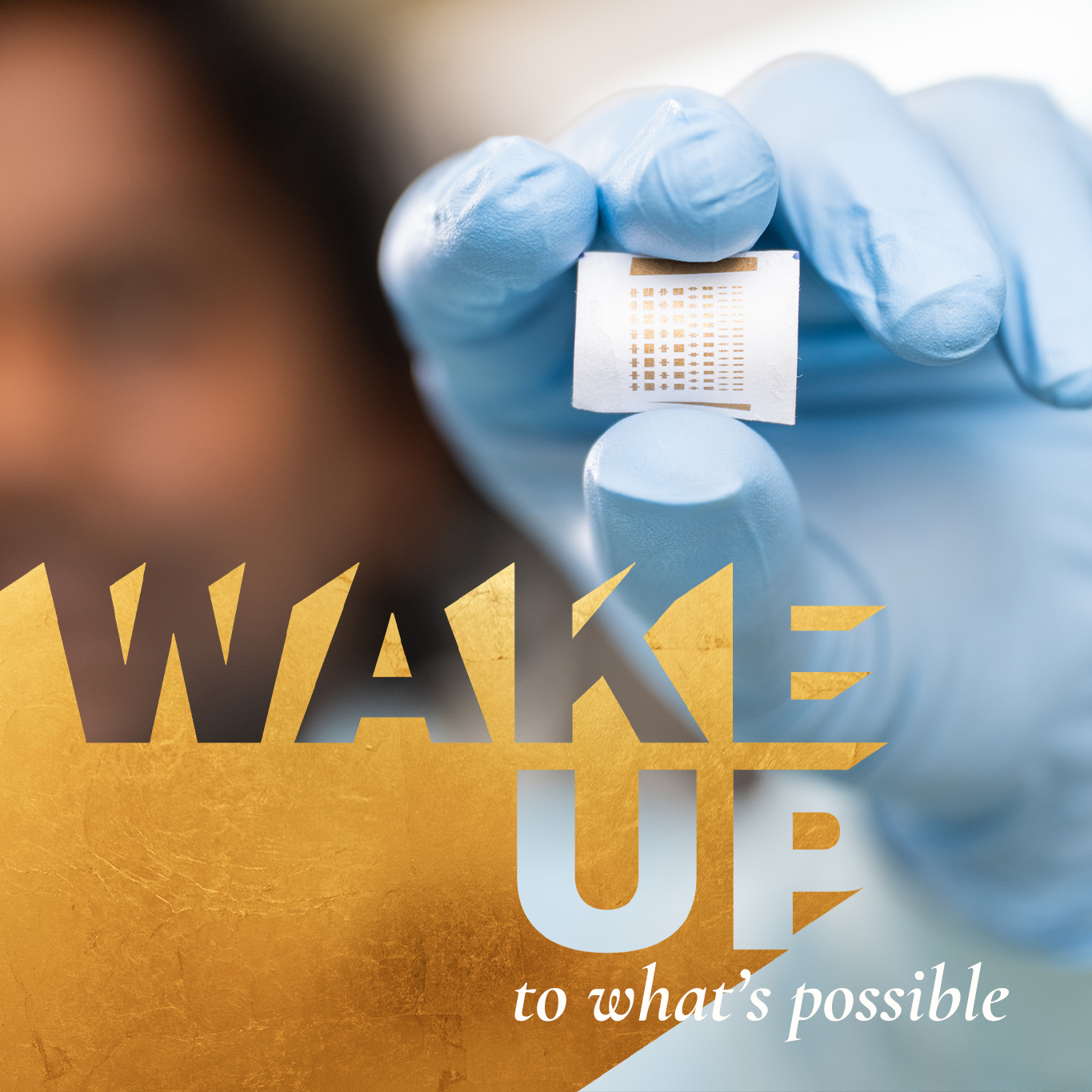
What if a final paper wasn’t a paper at all, but a custom digital brain built by the students themselves? Learn how Wake Forest Physics professor Jed Macosko turned his classroom into an AI laboratory by not just allowing his students to use new generative AI tools-he challenged them to master them.
Emerging & Future Technologies
Emerging & Future Technologies
The pace of technological advancement is rapidly reshaping every aspect of human life and society’s foundations — education, work, justice, environment, and human connection. Artificial intelligence rivals the internet in societal impact, while fields like regenerative medicine, materials science, and quantum computing hold vast promise — and profound risk.
Guided by our Pro Humanitate ethos, Wake Forest’s Emerging and Future Technologies (E‑FT) Initiative advances inquiry and education that integrate discovery and technical excellence with ethics and policy to promote human flourishing.
As scientific discovery accelerates and technological systems become more deeply embedded in daily life, Wake Forest is embracing an approach that joins engineering and computation with ethical reflection, creativity, and social responsibility. Innovation, in this view, is never separate from the people and communities it affects.
We envision a future in which breakthrough technologies are designed with care for both people and the planet; discovery is approached with integrity; and progress expands opportunity rather than widens divides.
This vision means:
- Transforming fundamental science into materials, devices, and systems that improve health outcomes, reduce environmental impact, and strengthen resilient communities.
- Uniting disciplines: engineering, computer science, physics, chemistry, medicine, law, business, divinity, and the arts to shape technologies that advance justice, sustainability, and human dignity.
- Approaching artificial intelligence as a space for understanding human agency, character, and judgment, a catalyst for transformative learning and student growth as well as a means to develop new tools for efficiency and/or automation.
- Creating experiential learning environments in which students and faculty design with vision, deliberate with wisdom, and act with courage.
- Developing partnerships and new approaches to communication with communities outside of higher education to foster trustworthiness, equity, and long-term societal wellbeing.

Wake Forest University’s Emerging and Future Technologies initiative unites cutting-edge science and engineering with law, medicine, business, the arts, and the liberal arts — ensuring that the university’s contributions to transformative technologies are matched by equal commitment to their ethical use and societal impact. (Click to learn more.)
At the scientific core, the Center for Functional Materials (CFM) and NanoteQ Center bring together approximately 40 distinguished faculty working across nanomaterials, quantum information systems, and advanced materials, supported by state-of-the-art fabrication and characterization infrastructure. NanoteQ’s Quantum Computing Working Group is developing novel quantum processing technologies that have already attracted substantial commercial investment.
Artificial intelligence represents the initiative’s second major pillar — one Wake Forest is actively and strategically building, with new programs and collaborations launching across every school and campus. AI @ Wake serves as the university-wide hub connecting faculty, staff, and students to resources and guidance, while the Center for Artificial Intelligence Research (CAIR) at the School of Medicine is establishing leadership in AI-driven healthcare spanning diagnostics, health equity, and cancer care. The Wake Forest Institute for Regenerative Medicine (WFIRM) — recognized internationally as a leader in translating scientific discovery into clinical therapies, and the first in the world to engineer laboratory-grown organs successfully implanted in humans — is now deploying AI, 3D bioprinting, and body-on-a-chip technologies across its work on more than 40 replacement tissues and organs. The Center for Remote Health Monitoring develops user-centered digital health technologies that provide an unprecedented picture of a person’s health in everyday life using wearable sensors, AI, and machine learning to monitor conditions ranging from cardiac arrhythmia and sleep disorders to mental health and mobility. The Center for Bioethics, Health, and Society ensures that across all of these frontiers — from AI-driven diagnostics to engineered organs — ethical oversight and humanistic inquiry remain integral to discovery rather than afterthoughts.
The Departments of Computer Science, Engineering, Physics, and Chemistry provide the core technical foundation for AI and data science research, while the AI in Intelligent Remote Sensing in Conservation and Discovery (IRSC) Lab is pioneering the use of AI and geospatial technologies in biodiversity science — in partnership with the Sabin Center for Environment and Sustainability and CINCIA. The Business School’s Center for Analytics Impact links AI and data science to industry partnerships and experiential learning, and the new Master of AI Strategy and Innovation in the School of Professional Studies is preparing the next generation of leaders to navigate AI-driven transformation. Finally, the Intellectual Property Clinic at the Law School is building expertise in the legal frameworks governing emerging technologies, and the AI Institute Summer Program is already building a pipeline of students fluent in both the science and ethics of AI.What makes Wake Forest’s Emerging and Future Technologies initiative truly distinctive is the depth of its human-centered framing. The Humanities Institute, the Center for Literacy Education, and the Center for the Advancement of Teaching (CAT) lead critical inquiry into how AI and emerging technologies reshape communication, creativity, writing, and pedagogy — while the Program for Leadership and Character brings nationally recognized, research-grounded scholarship on ethics and moral formation directly into engineering and technology education. This breadth reflects Wake Forest’s teacher–scholar model and its Pro Humanitate mission at their most distinctive: the conviction that building technological capacity and cultivating ethical wisdom are not separate tasks but one unified endeavor.
Explore the Forest
More than 20 programs and centers are advancing this work.
Stories
Showing up & taking action
-
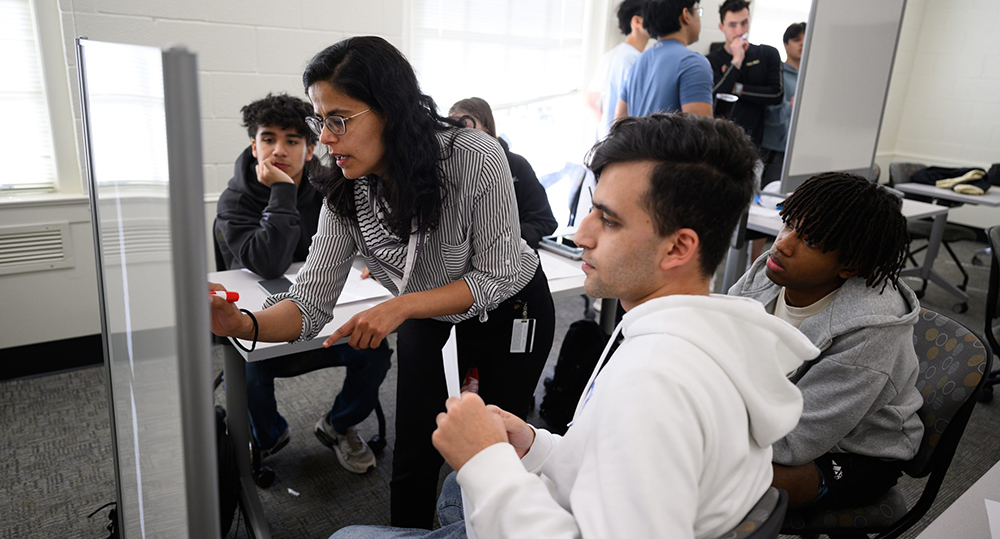
How Professor Jed Macosko turned his classroom into an AI laboratory
-
Securing the Future of AI
With a $598,609 NSF CAREER award, Wake Forest computer scientist Sarra Alqahtani is developing the first safety and security standards for multi-agent AI systems, with real-world applications in healthcare, disaster response, and conservation.
-

WFU Physicists, Physiologists and Physicians Developing Promising Technology to Prevent Device Thrombosis
A Wake Forest research team is using far-red light and nitrite to reduce dangerous blood clotting in dialysis machines used in ICUs, with a new NCBiotech grant supporting the technology’s next development phase.
-

Professor Oana Jurchescu Named 2025 Fellow of the Materials Research Society
Physics professor Oana Jurchescu became the first Wake Forest faculty member elected to the Materials Research Society Fellows, recognizing her sustained contributions to the field of organic electronic materials.
-

Computer Scientist Wins NSF CAREER Award to Advance Alzheimer’s Research Using AI
Assistant professor Minghan Chen received a five-year, $500,000 NSF CAREER award to develop an AI framework called Neuron Twin that models how Alzheimer’s disease spreads across brain networks to improve early diagnosis and treatment.
-
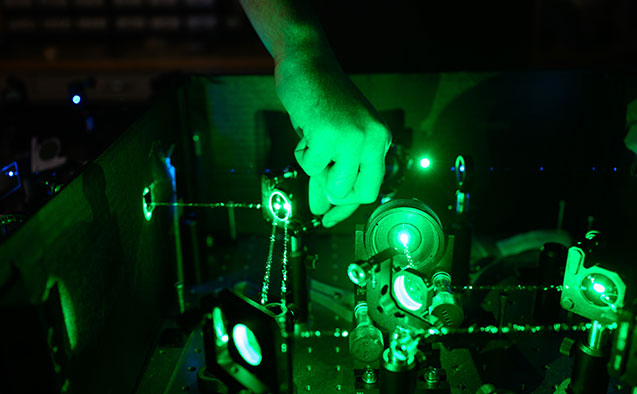
Physics pioneers win NSF CAREER Awards
Assistant Professors of Physics Ajay Ram Srimath Kandada and Stephen M. Winter have each been granted National Science Foundation CAREER awards, which recognize the best and brightest talent in the United States. Together, the two grants total more than $1 million.
-
Physics professor brings first NSF Special Creativity award to WFU
A team of researchers at Wake Forest University, the University of Kentucky and Princeton University have received a rare and coveted National Science Foundation Special Creativity extension for their current grant. This award allows the group to take on high-risk, high-reward opportunities in electronic materials. Physics professor Oana Jurchescu leads the Wake Forest effort.